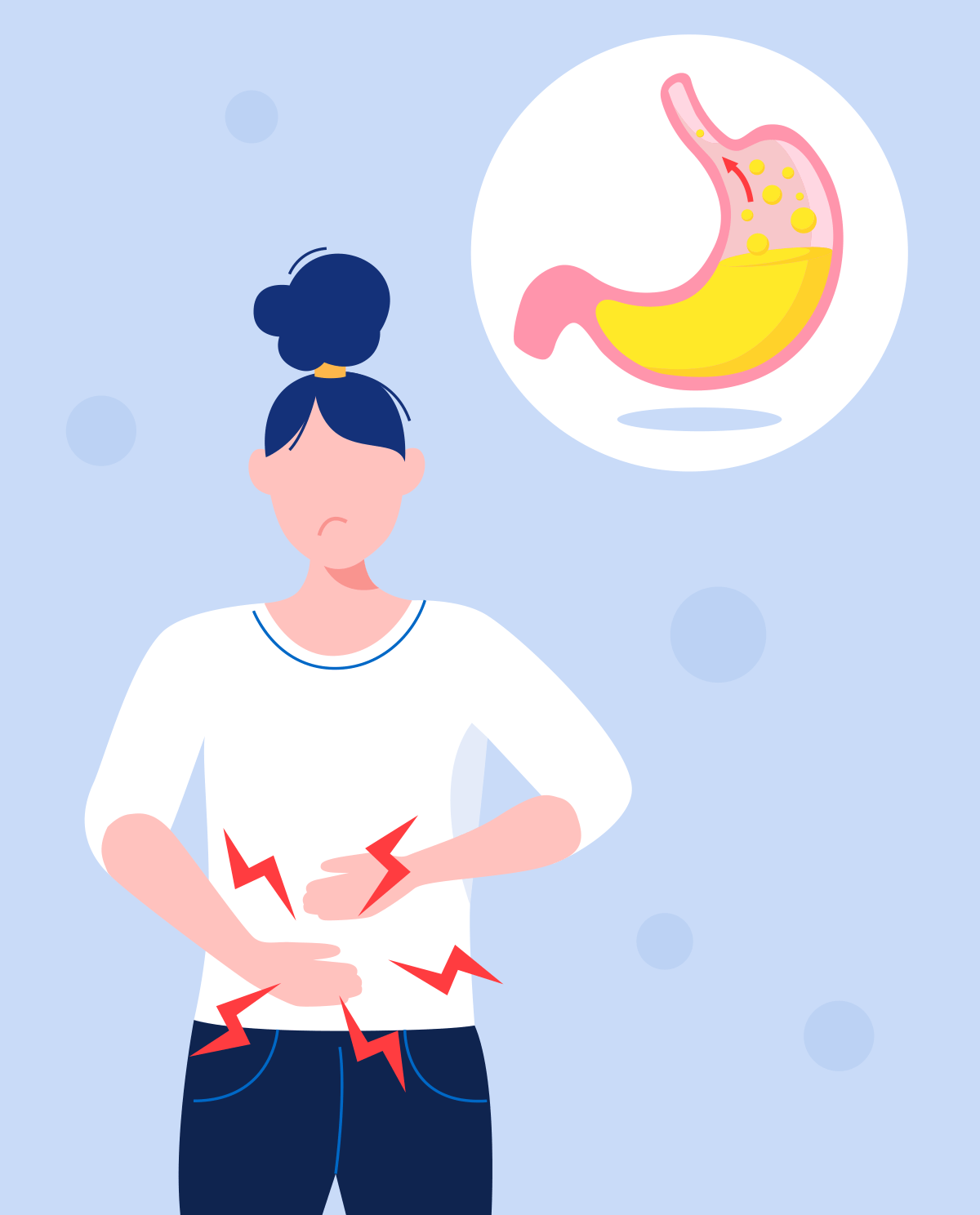
Heartburn is an unpleasant burning sensation behind the breastbone. Its most common cause is the backflow of acidic stomach contents into the esophagus, known as gastroesophageal reflux (GERD - gastroesophageal reflux disease).



Causes of gastroesophageal reflux
Gastroesophageal reflux disease is one of the most common diseases of the gastrointestinal tract. It affects approximately 40% of the population in developed countries. It most commonly affects people between 30 and 60 years of age, and its incidence increases with age. Reflux is caused by impaired function of the lower esophageal sphincter (LES). Normally functioning LES relaxes, allowing food contents to move from the esophagus to the stomach, and then contracts to prevent stomach contents from flowing back. The etiology is multifactorial; factors contributing to GERD include, among others:
- Obesity
- Diabetes
- Alcoholic polyneuropathy
- Pregnancy
- Hormonal contraception
- Medications (nitrates, calcium channel blockers, methylxanthines, β2-agonists, anticholinergic drugs)
- Hiatal hernia
Symptoms
The most common symptoms include heartburn and belching without an odor. These symptoms become more severe after a meal, when lying on one's back, when bending over, and during straining.
Other symptoms may also occur, such as:
- hoarseness (especially in the morning),
- dry cough,
- wheezing,
- chest pain.
Alarm symptoms requiring prompt diagnosis include:
- swallowing disorders,
- pain when swallowing,
- weight loss,
- gastrointestinal bleeding.
Diagnosis
Experiencing the symptoms listed above requires medical consultation. The diagnosis is made based on the medical history and physical examination. Sometimes a specialized test - gastroscopy - is necessary. During this examination, the doctor assesses the appearance of the mucosa of the esophagus, stomach, and duodenum and also takes tissue samples for histopathological examination. Another important diagnostic method is 24-hour esophageal pH monitoring with simultaneous measurement of esophageal impedance. This involves inserting a special thin probe through the nose into the esophagus. One end contains an electrode that measures the concentration of hydrogen ions (pH), while the other is connected to a special device - a recorder (usually worn on the arm). The patient is asked to carry out normal daily activities and record the time and type of meals consumed. After 24 hours, the data is processed by a computer program and analyzed by a doctor. Contrast X-rays were also performed in the past, but this examination is now considered to have limited usefulness.
Prevention
Modifying several habits can reduce or even completely relieve symptoms. Attention should be paid to:
- Eating meals no later than 2-3 hours before bedtime
- Raising the head of the bed
- Quitting smoking
- Limiting the consumption of fatty foods, alcohol, and coffee
- Losing weight in people with obesity
- Avoiding medications that affect LES function (nitrates, calcium channel blockers, methylxanthines, β2-agonists, anticholinergic drugs)
Pharmacological treatment
In cases of occasional heartburn, these measures may be sufficient. However, if symptoms do not resolve despite implementing them, the doctor may decide to start pharmacological treatment. The most commonly used medications are proton pump inhibitors (PPIs), taken once daily on an empty stomach.
Complications
Barrett's esophagus - means the replacement of the esophageal mucosa with tissues normally found in the stomach. It is usually asymptomatic and can be diagnosed during gastroscopy. It is a precancerous condition that predisposes a person to esophageal cancer. Management consists of regular endoscopic monitoring; in more advanced cases, the esophageal mucosa is resected or destroyed.
Esophageal stricture - occurs as a result of scarring in advanced reflux disease. It manifests as swallowing disorders. Treatment consists of endoscopic dilation of the esophagus.
Gastrointestinal bleeding - is characterized by tarry stools and coffee-ground vomit and may lead to anemia. Endoscopic treatment is used.
Esophageal cancer - gastroesophageal reflux is a major risk factor for esophageal adenocarcinoma. It manifests as difficulty swallowing food and pain when eating; these symptoms occur when the disease is already advanced. Treatment consists of removing the esophagus. If distant metastases are present, chemotherapy and/or radiotherapy are used.
- Szczeklik's Internal Medicine 2018: A Handbook of Internal Diseases, Authors: Piotr Gajewski, Andrzej Szczeklik, Publisher: Medycyna Praktyczna
- https://www.mp.pl/pacjent/badania_zabiegi/136366,ph-metria-przelyku
- https://www.mp.pl/gastrologia/wytyczne/129763,postepowanie-w-przelyku-barretta
- http://www.czytelniamedyczna.pl/2878,refluks-zodkowoprzeykowy.html